
2026-10-30
Kerala’s tropical climate makes swimming pools a great addition to homes, resorts, villas and hotels. But with heavy monsoon rains, high humidity and changing groundwater levels, choosing the right pool construction material is an important decision.
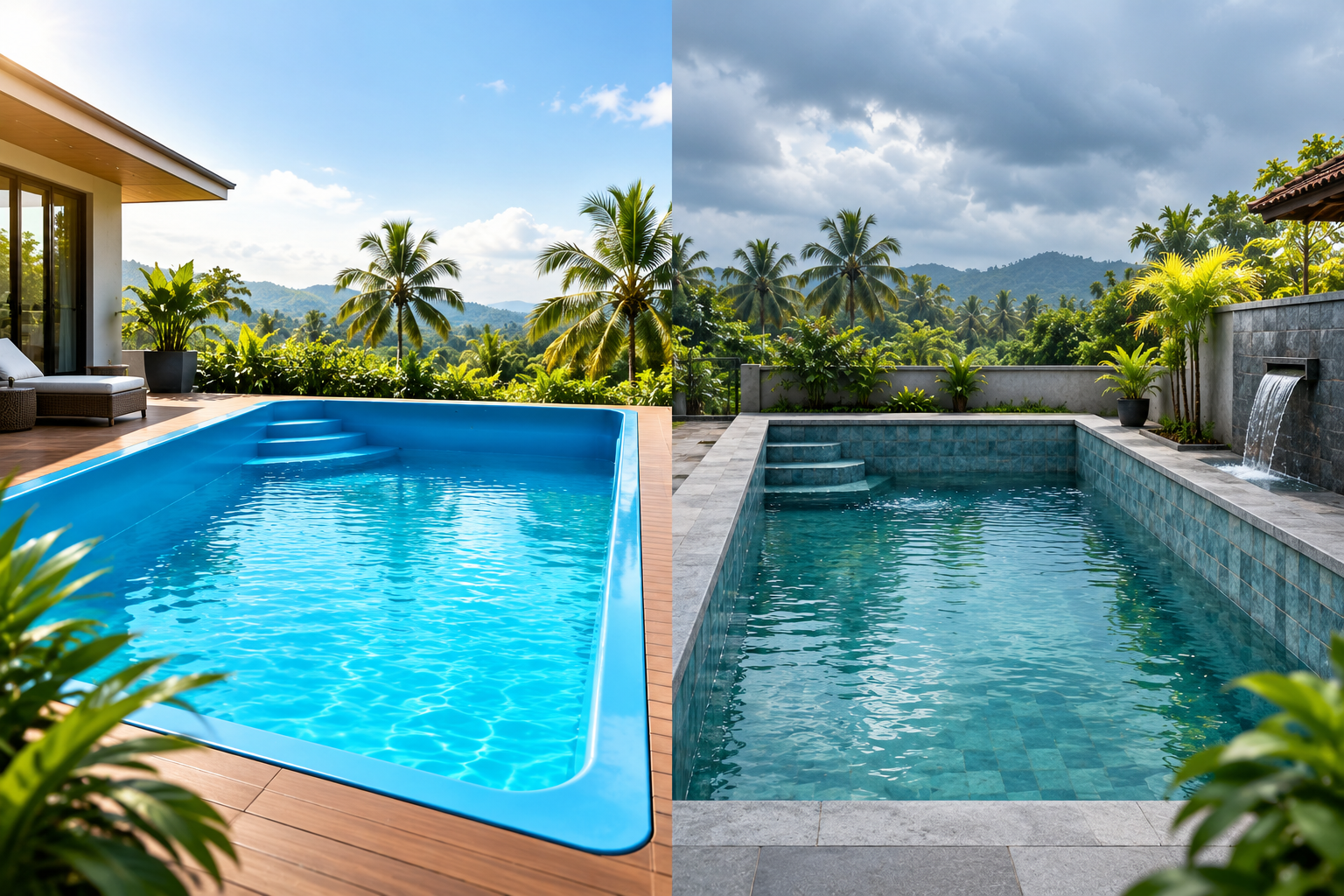
Two popular options are FRP (Fibre-Reinforced Plastic) pools and concrete pools. Both have their own advantages, but which one is better suited to Kerala’s climate?
Let’s compare their durability, maintenance, installation, design flexibility and suitability for Kerala’s weather.
An FRP swimming pool is made from fibre-reinforced plastic, a composite material designed to provide strength without the weight of a traditional concrete structure. Many FRP pools come as factory-manufactured shells that are transported to the site and installed after excavation and ground preparation.
• Limited Design Options: FRP pools are available in predefined shapes and sizes, depending on the manufacturer.
• Proper Ground Preparation: The site must be prepared correctly before installing the pool shell.
• Effective Drainage: Proper drainage is essential to prevent water accumulation around the pool during Kerala’s monsoon season.
• Groundwater Uplift Protection: High groundwater levels can create upward pressure on the pool, so suitable anchoring and uplift protection are important.
• Quality Materials: Choose a high-quality FRP shell with a suitable resin and protective coating.
• Professional Installation: Experienced installation professionals can help ensure proper positioning, backfilling and long-term pool performance.
A concrete swimming pool is constructed on-site using reinforced concrete, followed by appropriate waterproofing and interior finishing. It is a popular option for projects that require customised designs, larger swimming areas or architectural features.
A concrete swimming pool in Kerala can suit residential properties, luxury villas, resorts and commercial facilities where design flexibility is a priority.
• Longer Construction Time: Excavation, reinforcement, curing and finishing take time.
• Proper Waterproofing: Quality waterproofing is essential to prevent leakage.
• Structural Strength: Poor construction or ground movement can cause cracks.
• Regular Maintenance: Maintenance depends on the pool’s finish and water quality.
1. Build time
An FRP pool is usually ready much faster, because the shell is already made. Once the pit is dug and the base is ready, installation doesn’t take long. A concrete pool needs casting, curing, waterproofing and tiling, so it takes noticeably longer. In Kerala, that gets harder, because the rain can stop work for days.
2. Shape and size
This is where concrete wins. You can build almost any shape and any size. If you’re planning a large resort pool or a pool with a special design, concrete gives you freedom. FRP comes in set shapes and sizes, because the shell has to be transported to your site. It’s perfect for most homes and villas, but not for very large or unusual designs.
3. Algae and surface
FRP has a smooth gelcoat surface. Algae finds it harder to hold on, and cleaning is simpler. That matters a lot in our humid weather. Concrete pools with tiles or plaster have joints and rougher surfaces, which can trap algae if the water isn’t looked after. You can read more about this in our blog on how Kerala’s climate affects swimming pool water quality.
4. Leaks and cracks
Concrete pools can develop cracks over time if the waterproofing or structure isn’t done well. Repairing them can be messy and expensive. FRP doesn’t have joints inside the shell, so leakage risk is lower, though a poor installation can still cause problems.
5. Groundwater and monsoon
This one is often ignored. In many parts of Kerala, the water table rises sharply during the rainy season. An empty pool in such soil can actually be pushed upward by the pressure of groundwater. Both FRP and concrete pools need proper planning for this, with the right drainage and base preparation. This is why a site study matters before anything else.
6. Cost
FRP pools often look cheaper at the start, mainly because of the shorter build time and less labour. Concrete costs depend heavily on size, design and finishing. Honestly, there’s no fixed number. The swimming pool cost in Kerala changes with location, soil, size and equipment. The only reliable way is to get a quote based on your site.
If you are looking for FRP swimming pool installation in Kerala, it is important to choose a solution that suits your property, soil conditions and local climate. FRP pools offer a smooth finish, relatively quick installation and easy surface maintenance when properly installed. Explore Watermaq’s FRP Swimming Pool Installation services to learn more about your options.
Planning to build a swimming pool in Kerala? Contact Watermaq to explore your options and get professional guidance for a pool that suits your site, design preferences and long-term requirements.