
2026-10-30
Walk through any town in Kerala during the monsoon, and you will notice something. Wells overflow. Drains fill up. Water that should flow away ends up outside your gate.
Kerala receives heavy rainfall, has a high water table in many areas, and has densely populated towns and residential neighbourhoods. This combination makes wastewater management particularly important.
Still, many property owners treat wastewater management as an afterthought. It is something to sort out once the building is complete. By then, the solution can be more expensive and difficult to implement. Planning early makes a real difference.
Let us look at what property owners should know before choosing a wastewater or sewage treatment system.
People often use these two terms interchangeably, but they do not mean exactly the same thing.
Sewage is wastewater generated by toilets, bathrooms, kitchens and other domestic activities. It is commonly found in homes, apartments, hotels, hospitals and offices.
Wastewater is a broader term. It includes sewage as well as water generated by commercial and industrial activities. Food processing units, laundries, textile factories and seafood processing facilities may release wastewater containing oils, chemicals, dyes, suspended solids or high levels of organic matter.
Because the composition differs, the treatment requirements differ too. A system designed for a residential apartment building may not be suitable for a fish processing unit.
For this reason, choosing the right wastewater treatment plant service in Kerala begins with understanding the type and quantity of wastewater your property generates.
Many households in Kerala depend on open wells and borewells for their water supply. In some areas, these sources are located close to septic tanks, soak pits or drainage channels.
During heavy rainfall, poorly managed wastewater can contaminate nearby water sources, depending on the soil conditions, groundwater movement and the condition of existing sanitation systems.
The problem becomes more serious in densely populated areas where several buildings share limited space and drainage infrastructure.
Proper wastewater treatment helps reduce the risk of pollution, protects surrounding water resources and supports better sanitation. It also helps property owners manage wastewater responsibly instead of allowing untreated water to enter the surrounding environment.
A suitable treatment system is therefore an important consideration for both new buildings and existing properties.
If you are planning an apartment complex, hostel, resort, hospital or commercial building, a sewage treatment plant in Malappuram may be an important part of your project planning, depending on the building and applicable requirements.
Malappuram and other growing parts of Kerala continue to see development in residential, commercial and institutional construction. As buildings become more densely occupied, planning for sewage collection and treatment becomes increasingly important.
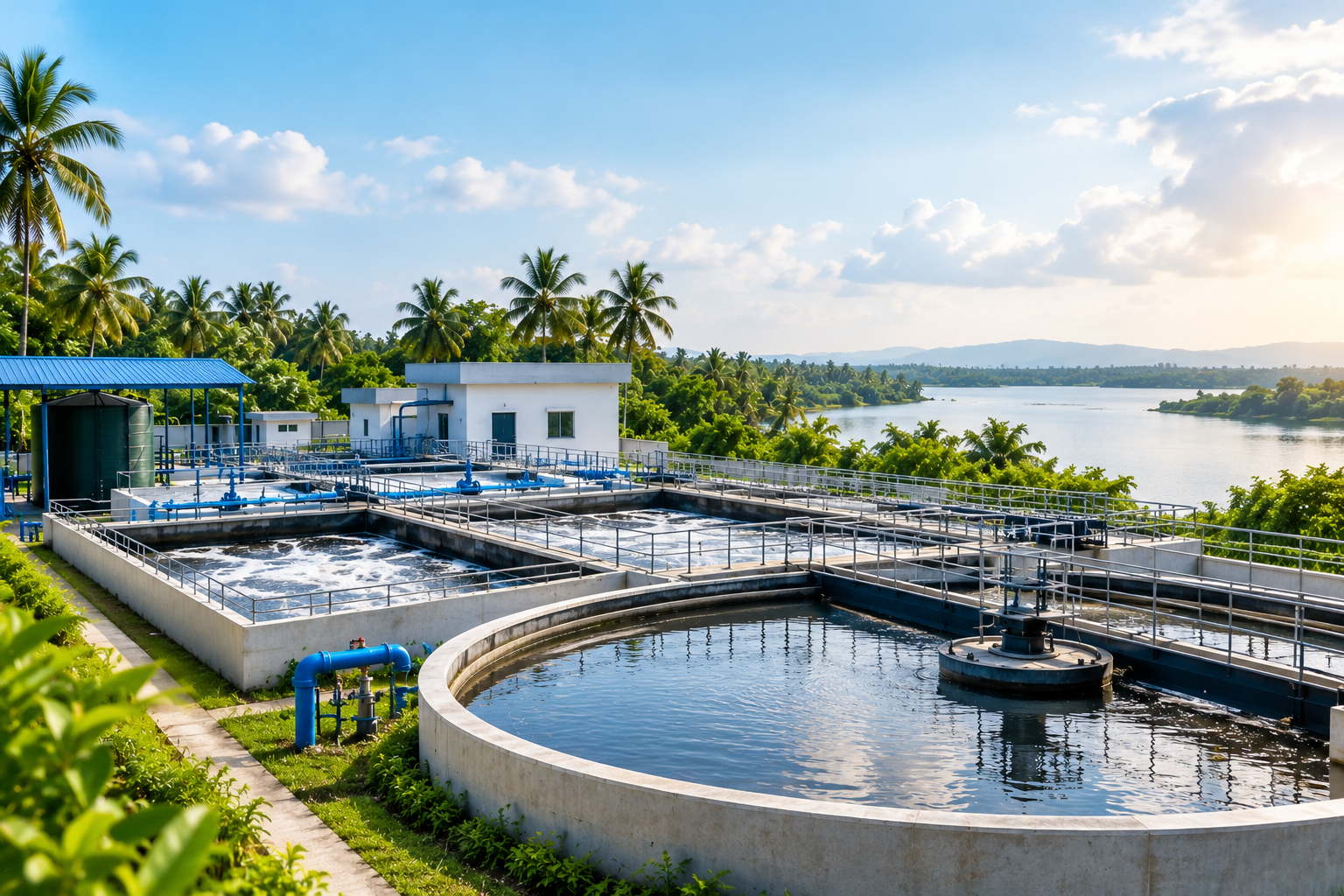
A typical sewage treatment plant, or STP, uses a combination of physical and biological processes to reduce contaminants in wastewater. Depending on the system design, additional filtration and disinfection may be required before the treated water can be reused or discharged.
Treated water may be suitable for applications such as gardening, toilet flushing and selected cleaning activities when it meets the relevant quality requirements.
The plant must be designed according to the expected wastewater flow, number of users and intended use of the treated water. Regular maintenance is equally important. Poor aeration, blocked pipes or accumulated sludge can affect performance and contribute to unpleasant odours.
Planning the system during the building design stage can also help avoid the extra costs and space limitations that may arise when installation is delayed.
Industrial wastewater can present challenges that ordinary domestic sewage does not. Water leaving a production process may contain oils, chemicals, suspended solids, dyes or other pollutants.
This is where an Effluent Treatment Plant (ETP) becomes important.
Businesses looking for an Effluent Treatment Plant in Kerala should first understand the characteristics of their wastewater. The right treatment process depends on the type of industry, the volume of effluent generated and the quality required after treatment.
For example, a food processing unit may produce wastewater with a high organic load, while a textile facility may need treatment for colour and specific chemicals. A rubber processing unit or engineering workshop may have a different set of requirements.
There is no single ETP design that works equally well for every industry. The treatment process must be selected according to the pollutants present and the applicable discharge or reuse requirements.
Installation is only the beginning. Before selecting an ETP plant in Kerala, businesses should look beyond the initial equipment price.
Here are a few important questions to ask a treatment service provider.
Experience with comparable industries can help a provider understand the wastewater characteristics and operating challenges involved.
The system should be based on the expected flow, wastewater analysis and required treated water quality rather than a standard model selected without proper assessment.
Electricity, chemicals, replacement parts, testing and sludge handling can all contribute to the overall cost of running a treatment plant.
Ask who will handle servicing, repairs, troubleshooting and operator training once the plant becomes operational.
A reliable provider should explain the technical requirements relevant to the project and help clarify what documentation or regulatory steps may be needed.
A dependable wastewater treatment service provider should be able to discuss these matters clearly and recommend a solution based on the actual site conditions.
Treatment plants do not always show problems immediately. Performance can decline over time when filters are neglected, blowers stop working or operators do not receive adequate training. Regular maintenance helps prevent small issues from developing into larger operational problems.
Wastewater treatment is not just about meeting regulatory requirements. It helps protect wells, reduce environmental pollution, support public health and make better use of available water resources.
Whether you are constructing an apartment building, managing a hotel or operating an industrial facility, planning wastewater treatment early can save time, reduce avoidable costs and prevent future complications.
The right solution depends on the wastewater your property generates, the space available, the required treatment quality and the maintenance support you can access.
If you are planning a new project or your existing treatment plant is not performing as expected, speak with a team that assesses your site and understands your requirements before recommending a solution.
Looking for wastewater or sewage treatment solutions in Kerala? Visit Watermaq to explore its water and wastewater treatment services and discuss the needs of your property or business.